Proxima Nova vs. Nunito: Same Genre, Different Feeling
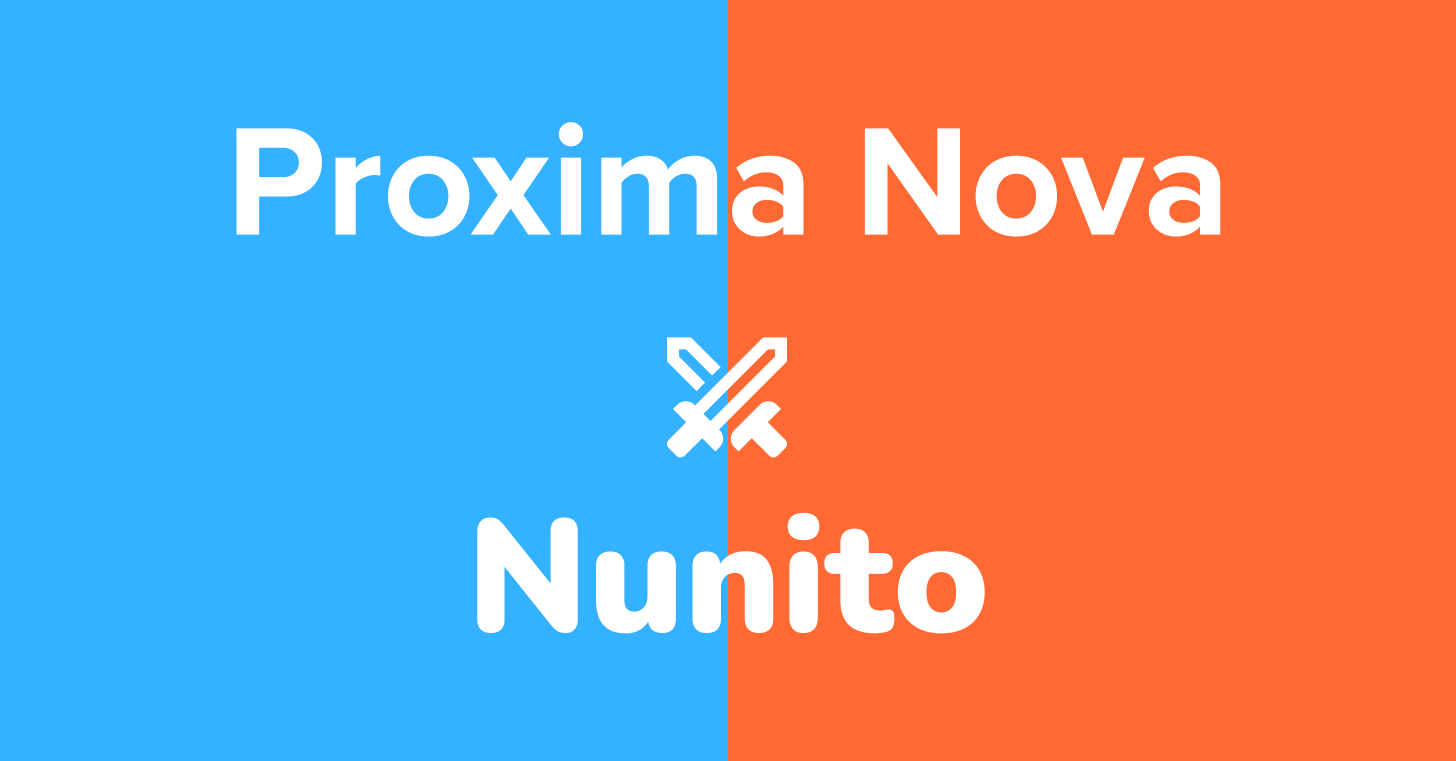
They’re everywhere—flexible and easy to reach for—but Proxima Nova and Nunito aren’t interchangeable. The difference isn’t technical, it’s tonal: precision and trust versus warmth and friendliness.
What is Proxima Nova?
Proxima Nova is a geometric sans-serif designed by Mark Simonson, released in its current form in 2005. It occupies a rare middle ground: geometric in structure, humanist in feeling. That balance gives it a quiet confidence—clean and professional without tipping into cold.
With multiple styles in its family, it's built to scale across body copy, UI, headlines, and large-format type without friction. That range is why it became a go-to in branding, editorial design, and product interfaces. Proxima Nova doesn't ask for attention. It earns trust by staying out of the way.

Where it came from
Simonson began sketching Proxima Nova in 1981—decades before its release. His goal was to reconcile two poles of sans-serif design: the geometry of Futura and the neutrality of Helvetica.
He drew from a wide set of references: Akzidenz Grotesk, Kabel, American gothics, even highway signage. The result isn't a direct descendant of any single source. It's a synthesis. That lack of a single lineage is exactly what makes it so adaptable.
What is Nunito?
Nunito is a rounded sans-serif originally designed by Vernon Adams and later expanded by Jacques Le Bailly. At first glance, it shares a similar skeleton with geometric-influenced sans-serifs. But its rounded terminals change the tone completely.
Where Proxima Nova is restrained, Nunito is soft. Friendly without being naive. It feels open, approachable, and easy to engage with—especially in digital interfaces. As a variable font, it also offers fine control over weight and optical sizing, making it especially useful in UI systems where responsiveness matters.
Where It Came From
Adams designed Nunito in 2011, building on a classic grotesque foundation: low contrast, open apertures, generous x-height. Then he pushed one decision further than most would—fully rounded terminals.
There's a clear influence from Avenir, but where Avenir balances warmth with restraint, Nunito leans into warmth. After Adams passed away in 2016, Le Bailly expanded the family and introduced Nunito Sans—a companion without the rounded terminals. Together, they form a system that can shift between friendliness and neutrality without losing cohesion.

How they compare
On paper, they share a lot: geometric influence, strong legibility, wide families. In practice, they feel very different. Proxima Nova builds trust through precision. Nunito builds trust through warmth.

Which One Should You Use?
Start with the feeling, not the font.
Choose Proxima Nova if your brand needs to feel competent, modern, and composed. It's steady, reliable, and almost invisible in the best way—which is exactly the point.
Choose Nunito if your brand needs to feel human, welcoming, or slightly playful. People feel it immediately, even if they can't name why.
Use both if you're somewhere in between. Pairing Proxima Nova's structure with Nunito's warmth creates a useful tension—just be prepared to adjust sizing and spacing, since their proportions don't align perfectly out of the box.
Choosing between them isn't really about style. It's about tone. The fastest way to feel that difference? Drop your actual words, colors, and layout into Typogram Studio. The right choice usually becomes obvious once you see it in context.